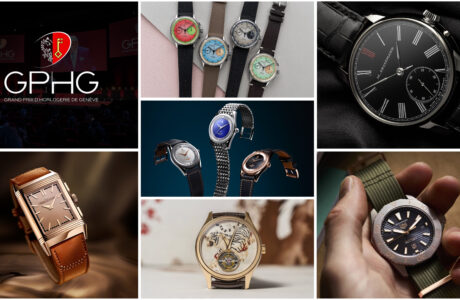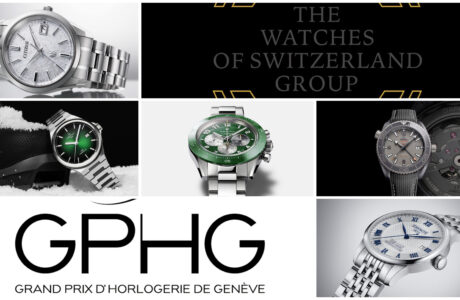
It’s the time of the year again, GPHG is just around the corner (9 November 2023), where brands compete in multiple categories in the Oscars of watches. Every week the writers at Scottish Watches will give their take on 5 categories in the lead-up to this wonderful event. This week we have the Men’s, Ladies’, Men’s Complication, Ladies’ Complication & Chronograph categories.
Men’s
Philologus
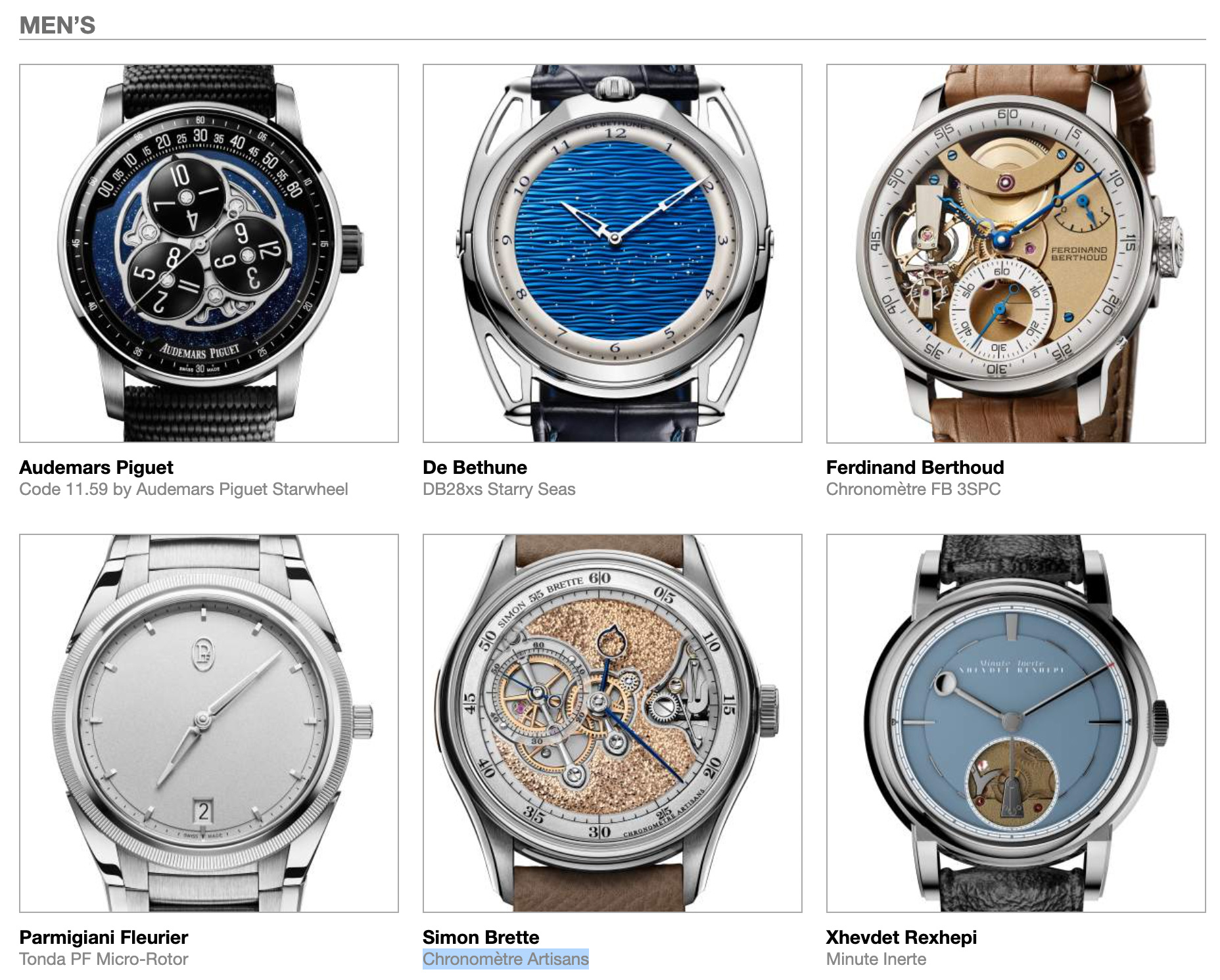
The men’s category in GPHG’s awards is defined as “men’s watches comprising the following indications only – hours, minutes, seconds, simple date (day of the month), power reserve, classic moon phases…”. It is essentially short for any watch that tells the time so long as it isn’t too complicated. Naturally, this leaves most brands with little choice but to focus on brilliant execution in terms of design, case & movement architecture, and finishing. The likes of De Bethune’s DB28xs Starry Seas, Ferdinand Berthoud’s Chronomètre FB 3SPC, Parmigiani Fleuier’s Tonda PF Micro-Rotor, and Simon Brette’s Chronomètre Artisans. Then you have something like Xhevdet’s Rexhepi’s Minute Inerte with an exceptionally cool dead-beat minute movement, yes you read that right, which is a great way to get an interesting non-complication feature into the watch. But what happens when you have a brand that takes the traditional concept of time-telling and throws it out the window, opting instead to build a watch that looks extremely complicated even if all it does is tell the hours and minutes? Well, in my book, we have the winner of this category, that’s what.

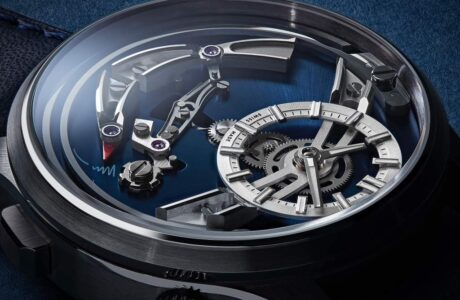
The Audemars Piguet Code 11.59 is perhaps one of the best iterations of this brand’s much-maligned collection. It embodies the essence of what the Code 11.59 allows Audemars Piguet to do i.e. push its boundaries. The Star Wheel is essentially a wandering hour-telling device, with curved discs (which add great depth), rotating on their pinion on top of a larger gear that turns all three discs. This allows for the arrow above each hour to point to the minute track that runs at the top of the watch at the appropriate time. The overall execution of the wondering hours in this watch is brilliant, one that creates a futuristic aesthetic for a time-telling concept that is almost three centuries old. When mounted on an adventurine dial ring, and set in a white gold ceramic case, what we have is some of the best of what Audemars Piguet has to offer. Easy, easy choice, for me anyway.
Ladies’

Sarah Fergusson
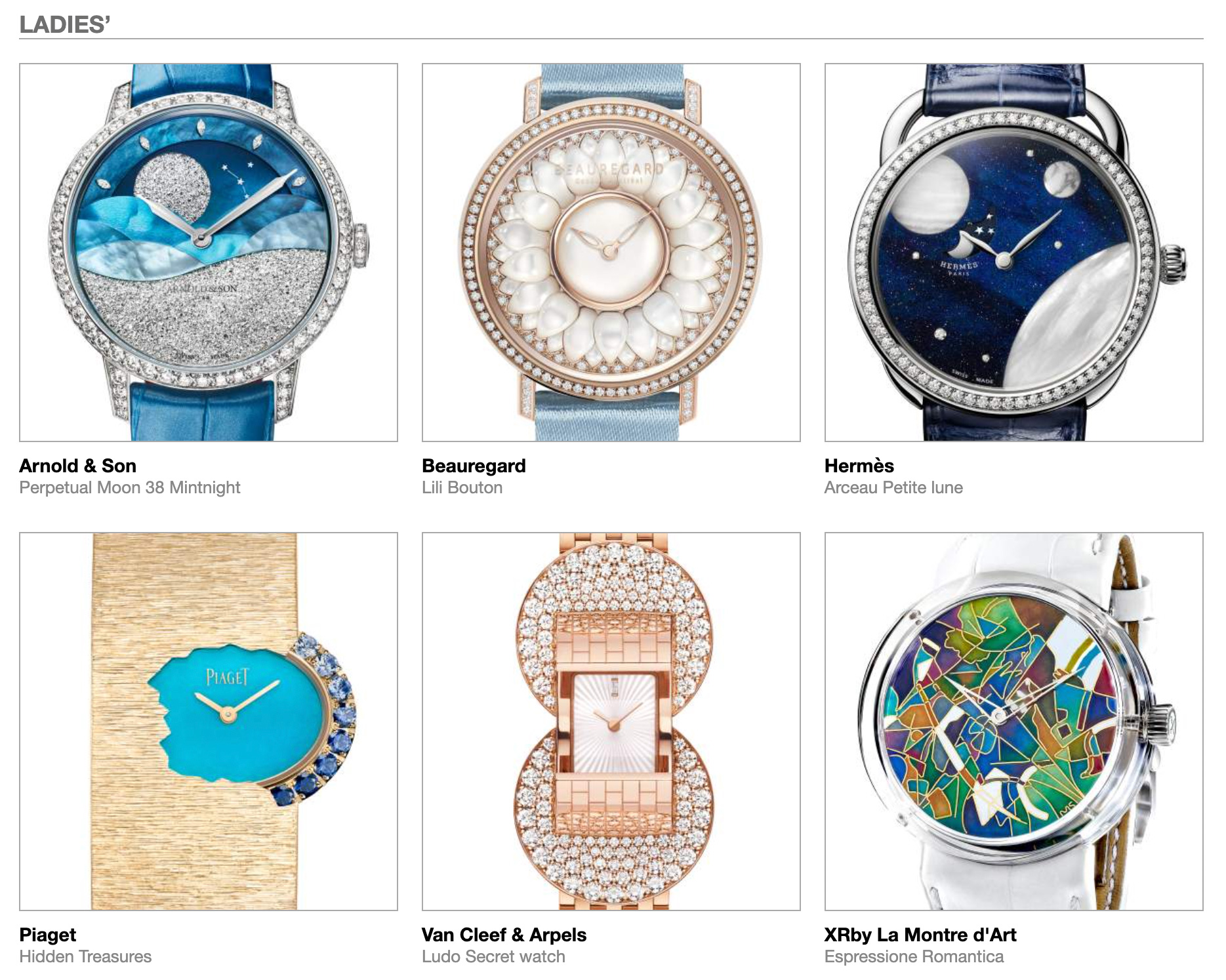
The GPHG ‘Ladies’ category is a difficult one. We have all said it many times – we don’t need to be gendering watches. There is absolutely a place for the ‘Jewellery’ category – these are beautiful, precious metal gem-set pieces of jewelry that also happen to tell the time. But looking at the Ladies’ category nominees, many of these lean very much towards Jewellery, and I found myself thinking, ‘Take away the diamonds and we have a watch!’ Each of the nominees is essentially a dress watch, so perhaps we have a Ladies Sports category, and a Men’s Dress category, or ideally and much easier, no gendering at all. The average price of the Ladies’ nominees is 83,000 CHF. Not many of the nominees in any category are affordable (except the Petite Aiguille and Challenge categories of course.) But at that high-cost level, if we maintain gendering, it is not conducive to encouraging more women to get into watches. To offer a comparison, the Sports category nominees have an average value of around 18,000 CHF.
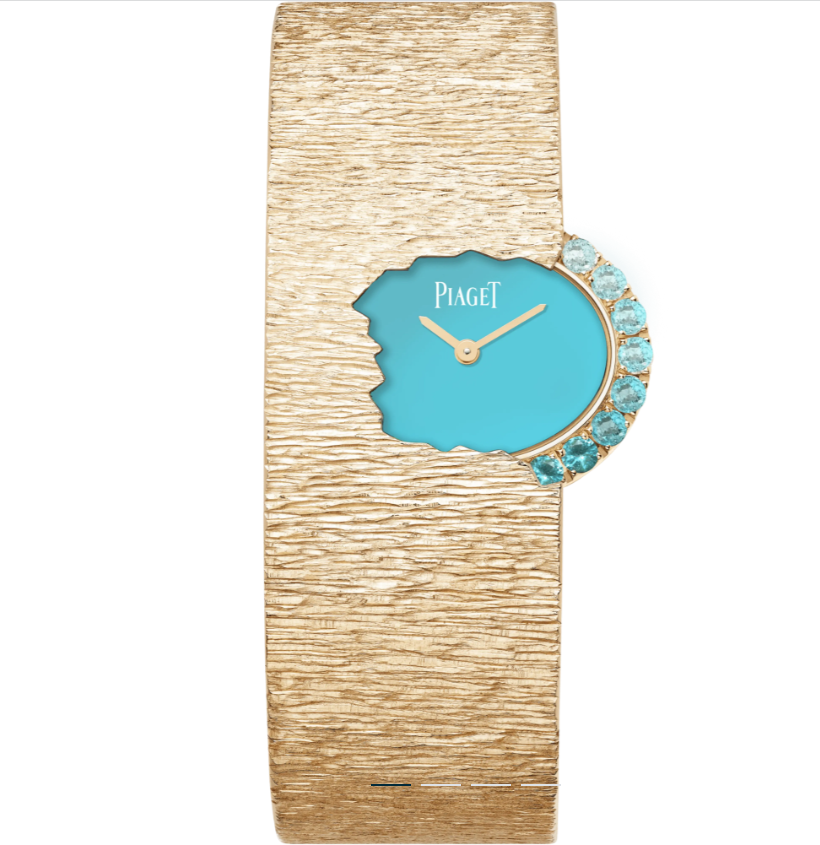
I accept that these words are not going to change the world, or the watch industry though, so in the interim, let’s talk about the Lady’s category nominees. At first sight, purely aesthetically, I would choose the Hermes (perhaps they would swap out the sparkly bezel if I asked nicely.) Another iteration of the Arceau model, it has an automatic movement within a white gold case, both good things and the dial is a satisfying use of mother of pearl and aventurine to form a view of space. The Arnold & Son nominee has an automatic movement boasting an excellent power reserve of 90 hours (see how I am leading with technical information here) but I will admit that the innovative use of ruthenium in crystal form has a very impressive effect, looking a lot like a lunar landscape. The Beauregarde, VCA, and Piaget would sit more comfortably in the Jewellery category. All are gem-set and have quartz movements, and there is nothing wrong with quartz but in this context, the ‘watch’ element of these pieces seems to shrink away even more for not being mechanical. Something is intriguing about the XRby, and although it’s not one for me, I am struck by the fact it combines an automatic movement with decent specs, a white gold case, and enameling with being a minimal run of seven pieces, all for 44,000 CHF; not cheap, but cheaper by comparison to the others. Who do I think will win? The Piaget – purely because on its release earlier this year I saw many appreciative posts in my Instagram feed, and I will admit I might have a wee soft spot for it myself.
Men’s Complication
Misael Alves
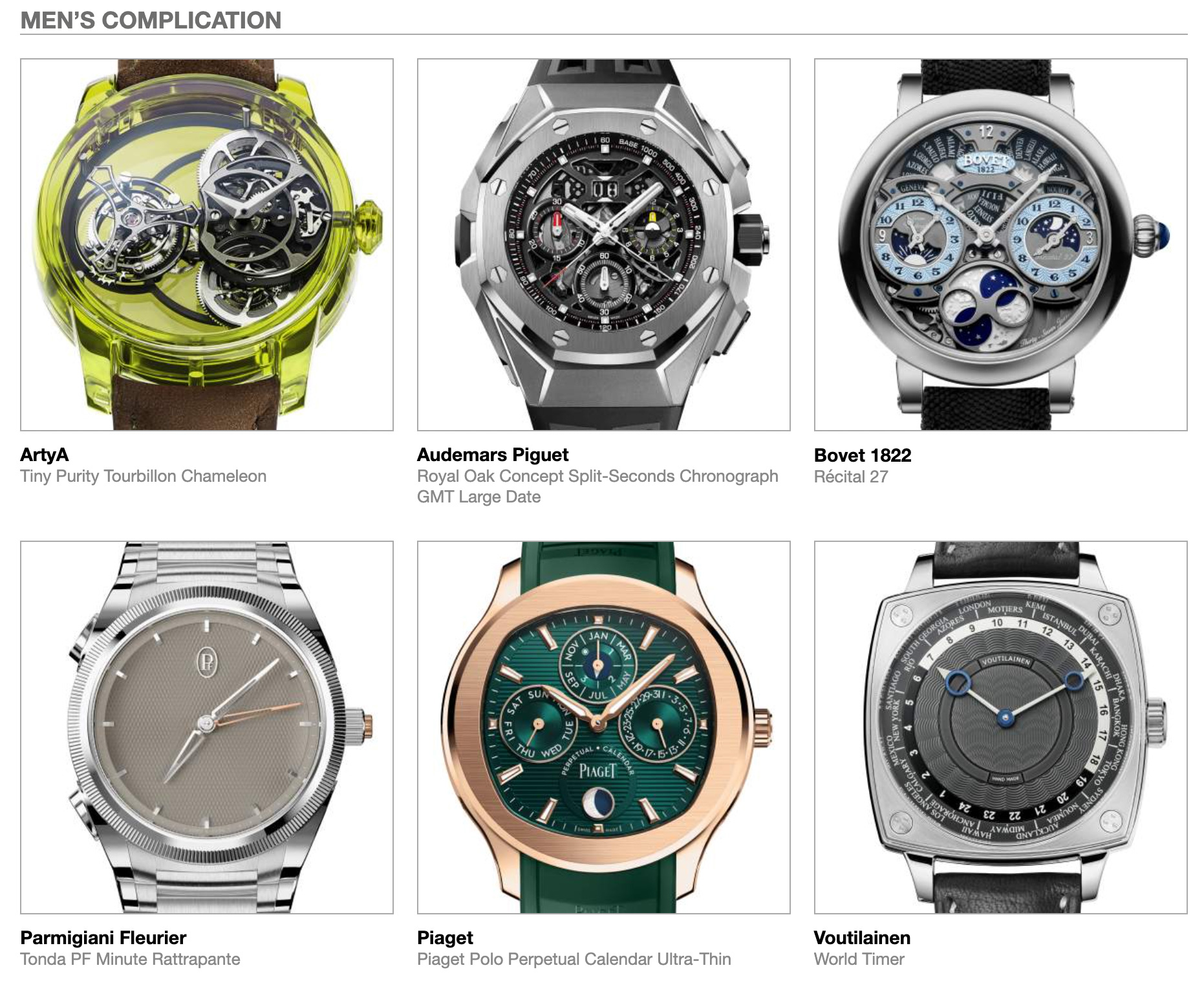
A complication or complication that is both classical and/or innovative complications that showcases remarkable and innovative technology is the name of the game for the Men’s Complication category of GPHG. In these terms, the ArtyA Tiny Purity Tourbillon Chameleon has a remarkable reply to every point. Starting with the “traditional”. The not-so-tiny predecessor to ArtyA’s Tiny Purity Tourbillon Chameleon measures 46mm in diameter but a restructuring of the caliber sees this reduced to 39mm. A full 7mm smaller. While still housing a glorious 17mm wide tourbillon. Making this possible is ArtyA’s latest movement collaboration with Telos from La Chaux-de-Fonds. These independent specialists worked with Yvan Arpa to skeletonize the dial and streamline the design so that the dial and gearing are set at 3 o’clock and the double barrels that hold 72 hours of power reserve either side of it in the vertical spectrum. The redesign leaves more negative space, enhancing the use of a sapphire case, and sets the stage for the large flying tourbillon to perform its routine at 9 o’clock. Accounting for 44% of the dial volume, the cast iron tourbillon cage is now better at resisting shocks with a fixed stud holder and new Incabloc & inertia-block balance. The tourbillons’ stage is quite a spectacle by itself! Color-changing sapphire was pioneered in the industry by ArtyA in 2021. The Nano Sapphire is grown as a transparent polycrystalline material and is synthesized with SiO2 (silicon dioxide) and Al2O3 (aluminum oxide) at 1700°C. Besides the color-changing properties, this gives the sapphire, it also improves its durability, racing it from 5 to 7 on the Mohs scale. In natural light, the case with appear green by will instantly change when exposed to artificial light of 6500 Kelvin or greater to orange.

Ladies Complication
Philologus
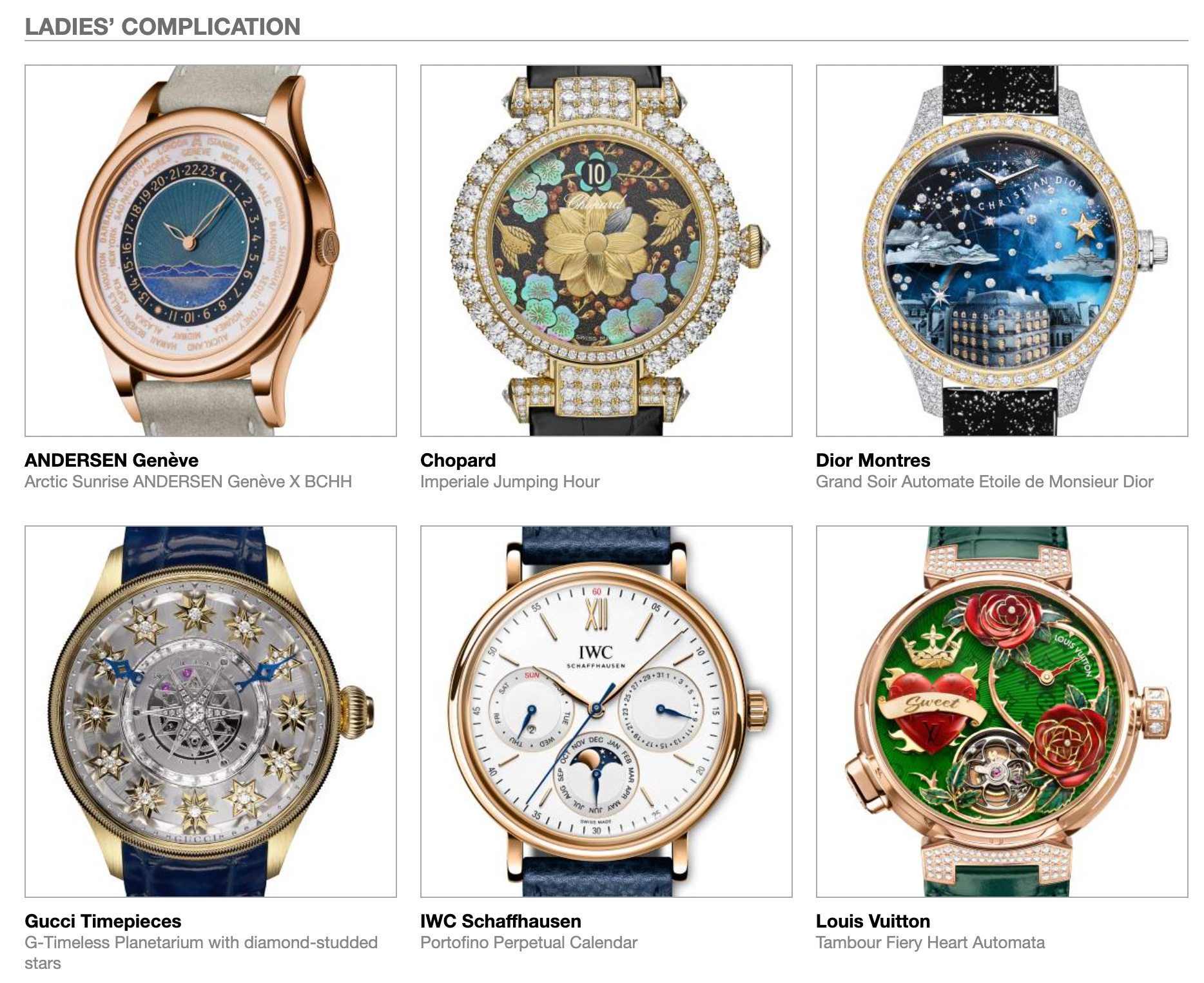
They say the Swiss watch industry moves slowly, but I still cannot wrap my head around how there are still delineations in an awards event like GPHG by men’s and ladies’, or in this case ladies’ complications. The rules state “ women’s watches that are remarkable in terms of their mechanical creativity and complexity. These watches may feature all kinds of classic and/or innovative complications … and do not fit the definition of the Ladies’ and Mechanical Exception categories.” What exactly is the definition of “women’s watches”? No one knows, and I doubt the organization dares define it. Historically, they might come in diminutive sizes, or bedazzled with all sorts of gemstones because nothing screams women like small sparkly stuff, no? In that regard, we have four entries from the likes of Louis Vuitton, Chopard, Dior Montres, and Gucci Timepieces. Interestingly, these four brands are traditionally fashion or jewelry brands whose core market is at least evenly split between men and women if not skewed towards the latter. While these four options no doubt would bring incredible artistic prowess and gem-setting capabilities, out of protest against the pigeon-holed category I am relegating them from consideration. On the other hand, it is encouraging though, that brands seem willing to enter more understated less blinged-out options into this category. In that camp, we had a beautiful world timer from Andersen Genève x BCHH in the Artic Sunrise and a great perpetual calendar from IWC’s Portofino collection. It is the latter that is my favorite (with some bias admittedly given it’s the only one I’ve handled and one I genuinely am considering purchasing).
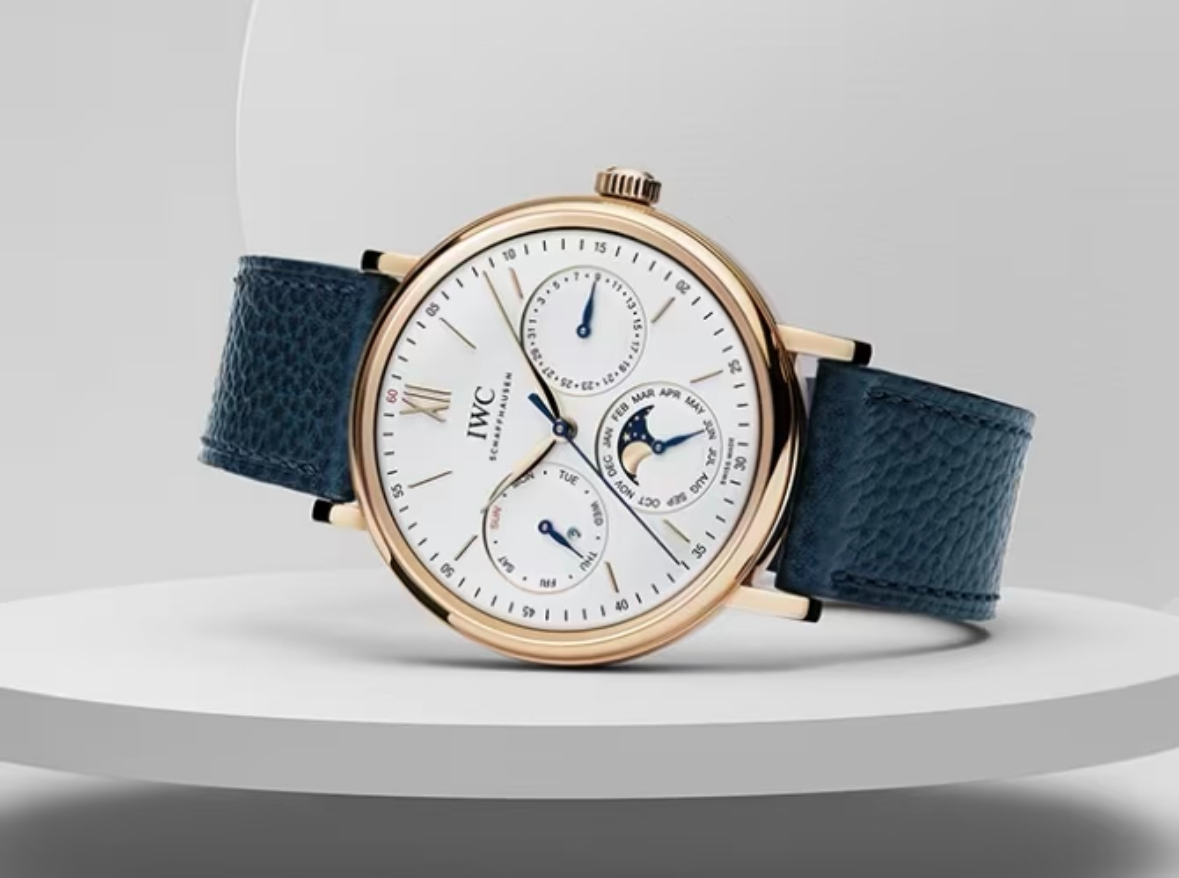
The IWC Portofino Perpetual is an extremely interesting offering from a brand predominantly known for its chronographs and Pilot’s watches. It isn’t just dressy, it is an old-school pocket watch, whose proportions help wear well despite its 40mm x 12.7mm sizing. As a perpetual calendar, it doesn’t require adjustments to the date/day/month, etc up till 2100, but what sets this apart is the accuracy of the moon phase. It uses a special reduction gear train which allows precision that doesn’t require adjustment for 577.5 years. There are immediate practical advantages to this watch too since all the complications of which there are a lot are entirely set via the crown with no need for any separate pin tools. How cool is that? IWC also threw in a 50m water resistance for good measure which makes this watch far more versatile than most perpetual calendars tend to be. All in all a great watch for both men and women looking for a modern perpetual calendar to rock. Will it win GPHG? I doubt so, but here’s hoping.
Chronograph
Mark Wheeler
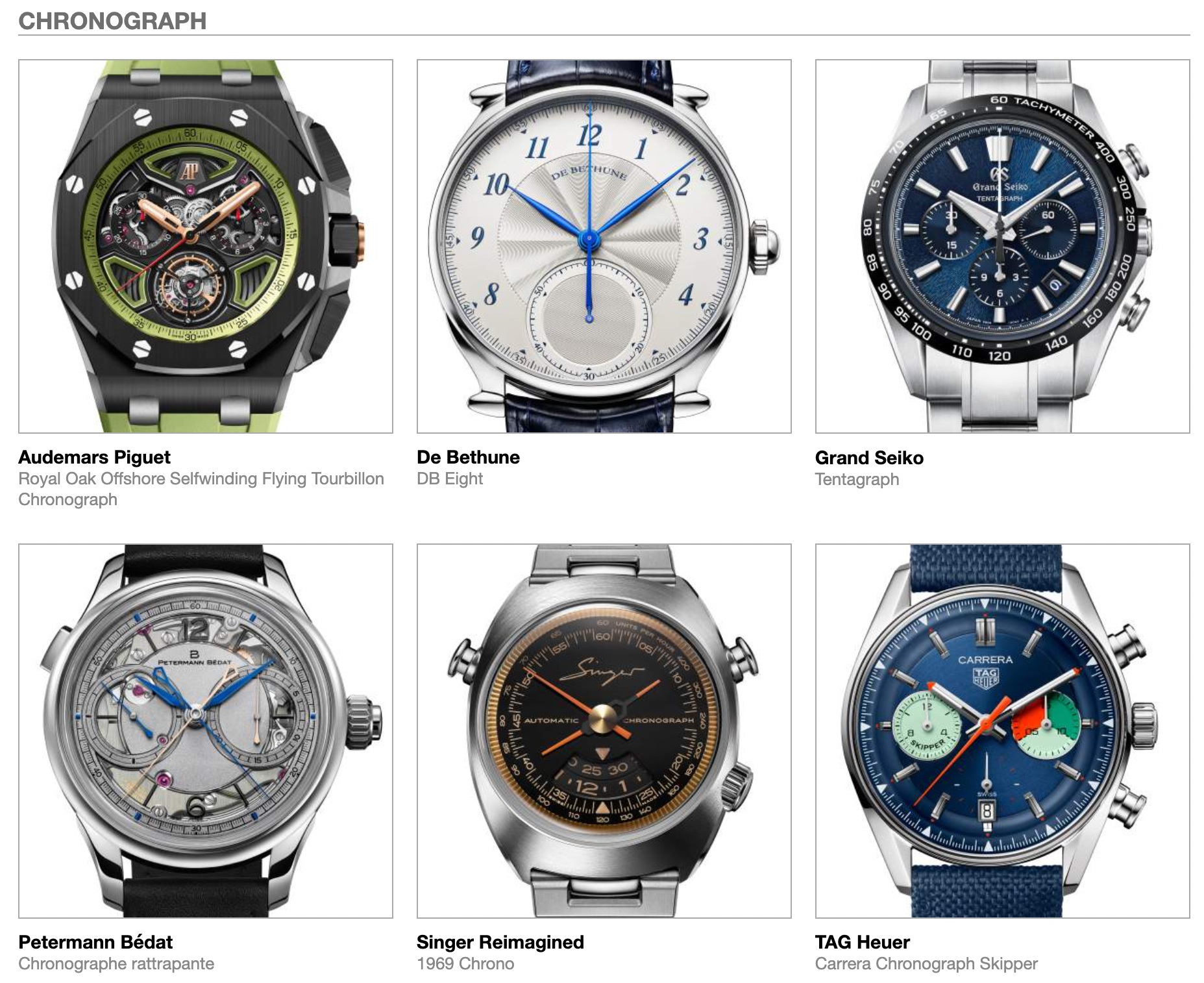
The chronograph prize was first awarded in 2014 and so is one of the newer categories in the competition. It is awarded to a mechanical watch comprising at least one chronograph indication. Additional indications and/or complications are admissible. As with all GPHG categories the prize is awarded to the best watch competing in the chronograph category.
The nominated watches are the bold Audemars Piguet Royal Oak Offshore Self-winding Flying Tourbillon Chronograph, the De Bethune DB8, the Grand Seiko Tentagraph, the Petermann Bèdat Chronographe ràttrapante, the Singer Reimagined 1969 Chrono and the Tag Heuer Chronograph Skipper. The AP is visually complicated but contains the fan-favorite tourbillon. The Grand Seiko is a more conventional affair but features their new self-winding chronograph movement and it shares a traditional 3 sub-register layout with the Tag. The Singer is a clear descendant of their 2018 winner but will its retro vibe still resonate in 2023? The Petermann Bèdat is a limited run of 10 pieces with a price of CHF 243,000 but has the ever-popular ràttrapante function and a semi-skeleton dial. The De Bethune is, in this company, the most visually restrained but will have all of the quality and attention to detail the brand is famous for.
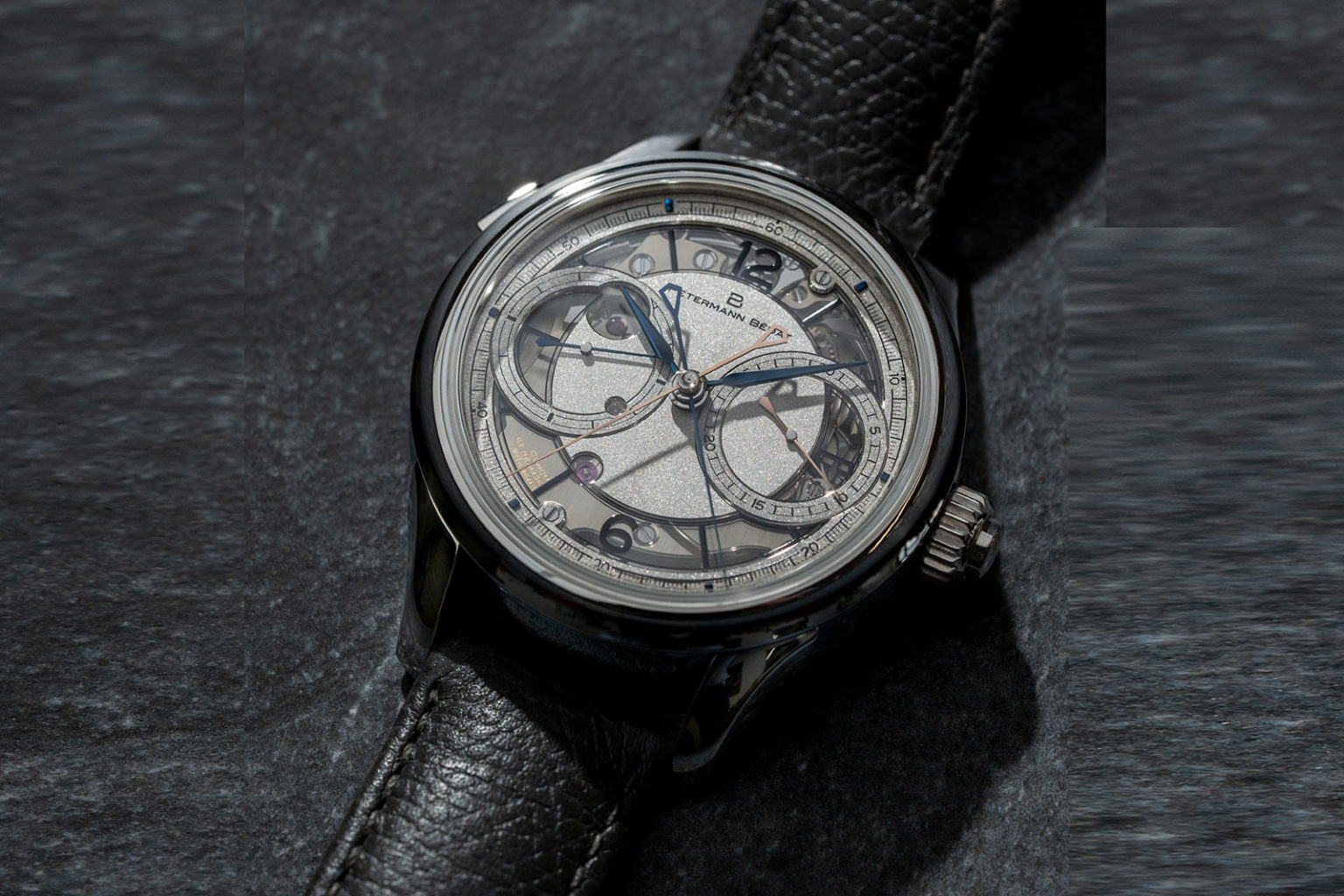
So, who will win? A single brand has not dominated the Chronograph category. Each year has given us a different winner. For 2023 both De Bethune and Singer Reimagined have won this category before but will they be the Jury’s favourites this year? Will the busy Audemars Piguet sway the judges or will the technical mastery and classic good looks of the Grand Seiko allow it to sneak into first place? I am going to choose the Petermann Bèdat. It’s made by an independent company with a short history (this is Switzerland after all) and manages to combine a rare, difficult chronograph type with modern good looks. A shoo-in? Well, it’s hard to say in this category but it would be a worthy winner.